Explore expert articles, technical guides, application case studies, and engineering updates from Menzel Motors.
China’s cement sector depends on drive systems that can handle heavy loads, abrasive dust, and long operating hours. Cement mill drive motors must deliver steady torque through demanding starts and changing production conditions. A motor’s nameplate rating matters, but so do cooling design, insulation, bearing protection, and compatibility with the mill’s gearbox or variable-frequency drive.
This guide examines ten manufacturers serving China’s cement industry. It compares practical selection factors, including power range, efficiency, service access, customization, and support for installation and maintenance. A shortlist is only a starting point. Plant layout, grid conditions, ambient temperature, and maintenance capacity can change which motor is suitable. Even a strong specification may disappoint if spare parts arrive late or commissioning support is weak.
A fictional maintenance engineer, Lin Wei, offers this illustrative—not independently sourced—view: “A dependable mill motor is proven by steady operation, not its brochure.” That distinction matters. Buyers should verify test records, references from comparable mills, and the scope of each supplier’s warranty. They should also ask how the manufacturer manages vibration, winding temperatures, and bearing failures in dusty service. This overview provides a practical framework, not a guarantee of performance. Some supplier data may be difficult to compare directly, and that limitation deserves attention. Use the rankings as a prompt for careful due diligence, then match each candidate to the mill’s actual operating profile.
China Top 10 Cement Mill Drive Motor Manufacturers
Cement Mill Drive Motors: Purpose and Operating Principles
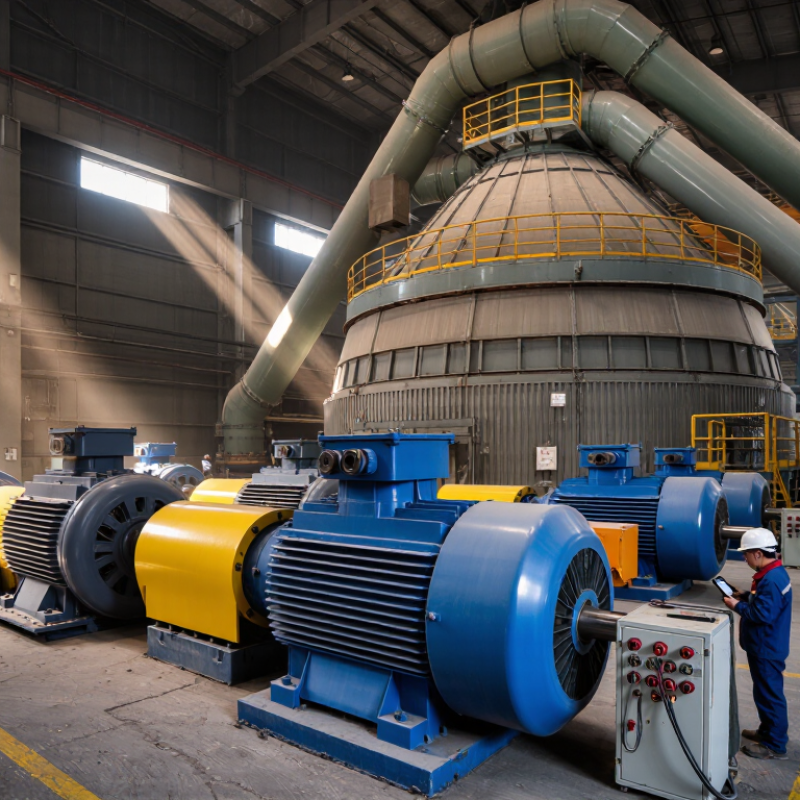
A cement mill drive motor turns electrical power into the torque needed to rotate a heavy grinding drum. The motor may connect through a gearbox and coupling, or use a different drive arrangement. As the drum turns, steel balls lift and fall, reducing clinker and other materials into fine powder. The motor must handle long operating hours and changing loads without overheating.
Performance depends on more than rated power. Engineers consider starting torque, operating speed, voltage, cooling, bearing design, and the mill’s mechanical load. During start-up, a loaded mill can demand substantial torque. Variable-speed control may help manage operation, but its suitability depends on the drive system. Small details matter. Misalignment or poor cooling can increase vibration, wear, and unplanned stoppages.
Tips: Check alignment and temperature regularly. Listen for new vibration. Keep service records, and follow the motor maker’s operating limits. These checks are simple, but easy to neglect during busy production periods. Manufacturer comparisons should include duty rating, protection features, service support, and compatibility with the mill—not power alone. A specification can look complete on paper and still miss a site condition. That deserves a second look.
The chart compares theoretical synchronous speeds at common 50 Hz and 60 Hz supply frequencies.
Operating principle: Synchronous speed is calculated as 120 × supply frequency ÷ number of poles. An induction motor’s actual running speed is slightly lower because of slip. The chart shows theoretical speeds, not specific mill operating measurements.
A cement mill drive motor must deliver high starting torque and steady power under heavy, fluctuating loads. Engineers should check the torque-speed curve against the mill’s inertia, loaded-start conditions, and selected gearbox or direct-drive arrangement. A motor that meets the rated kilowatt figure may still struggle during startup. This is easy to overlook. Speed control, where required, must also suit the motor’s thermal limits and the mill’s operating range.
Heat, dust, and vibration shape the specification as much as output does. Confirm the enclosure and cooling method for the site’s ambient temperature, altitude, and ventilation. Dust gets everywhere. Insulation class, temperature-rise limits, bearing design, and winding protection deserve close review, especially during long production shifts. Specify suitable sensors for winding temperature, bearing temperature, and vibration, then ensure operators can act on their readings. Accurate alignment between motor, coupling, and gearbox reduces avoidable bearing stress. Yet alignment is sometimes treated as a one-time task; in practice, foundation settling and routine maintenance can change it. Request clear test records, duty-cycle data, and maintenance access details before comparing motor proposals.
China’s Top 10 Cement Mill Drive Motor Manufacturers should be judged by more than installed power. A reliable comparison examines rated output, voltage, duty cycle, starting torque, and compatibility with variable-frequency drives. Cement mills face heavy loads, abrasive dust, and heat; a motor that performs well in a clean workshop may struggle beside a grinding line. Check insulation class, bearing design, cooling method, and documented service life. Small details matter.
The International Energy Agency’s Cement report in Tracking Clean Energy Progress 2023 estimates that cement production caused about 2.3 gigatonnes of direct CO₂ emissions in 2022, roughly 7% of global energy-related emissions. This figure does not rank motor suppliers, but it shows why operating efficiency deserves close scrutiny. Compare measured efficiency at realistic load points, not only catalogue ratings, and request test records and maintenance references. China’s leading manufacturers should also demonstrate local commissioning support and spare-parts availability. A top-ten list without transparent test conditions remains imperfect; buyers should verify performance at their own site.
China Top 10 Cement Mill Drive Motor Manufacturers: Manufacturer Profiles, Products, Capabilities, and Industry Focus
A useful manufacturer profile should describe more than rated power. It should identify motor type, voltage range, cooling method, insulation class, starting approach, and compatibility with the mill gearbox. For cement plants, high starting torque and steady operation under dusty, hot conditions matter. The U.S. Department of Energy reports that motor-driven systems use about 69% of industrial electricity. That makes efficiency and operating conditions worth checking together, not separately. A product sheet alone is not enough.
Compare each manufacturer’s capabilities through engineering support, testing facilities, customization, and service coverage. Ask whether the supplier can provide load data, temperature-rise records, vibration limits, and spare-parts guidance. The International Energy Agency estimates cement production causes about 7% of global carbon dioxide emissions. Efficient drive systems can support plant energy goals, although actual savings depend on mill design, load, and maintenance. A polished specification may still leave unanswered questions. That is worth noting.
Tips: Request references for similar mill capacities and operating climates. Check efficiency at the expected load, not only at rated output. Confirm installation dimensions and commissioning support before shortlisting suppliers. A small mismatch can become a costly delay.
China Top 10 Cement Mill Drive Motor Manufacturers
Comparing cement mill motor manufacturers requires more than checking rated power and price. A ball mill turning a loaded drum needs dependable starting torque, while a vertical roller mill may need tighter speed control. Ask suppliers to match motor design, cooling method, insulation class, and duty cycle to your actual process. Dust, heat, vibration, and frequent starts can expose weak choices quickly.
Support matters after installation. Compare commissioning availability, spare-parts lead times, diagnostic tools, and whether technicians can review vibration or temperature data. The IEA’s 2011 report, Energy-Efficiency Policy Opportunities for Electric Motor-Driven Systems, estimated that motor-driven systems consume about 46% of global electricity. That figure makes efficiency worth checking, but it does not replace site-specific lifecycle calculations. One uncomfortable detail: a low purchase price can still mean higher energy and maintenance costs. Rankings alone cannot settle that.
Tips: Request test records and a clear service-response plan. Check the load curve, starting frequency, and bearing-temperature limits. Ask for references from mills with similar duty. Then verify the claims with your own operating data; supplier paperwork can look convincing, and still miss real plant conditions.
Supplier-comparison framework, not a verified manufacturer ranking. No company-specific performance or reliability data is presented; request the listed evidence from each supplier before comparing or ranking manufacturers.
| No. | Comparison dimension | Cement mill application relevance | Evidence to request from each manufacturer | How to assess support and reliability |
|---|---|---|---|---|
| 1 | Mill and drive experience | Ball mills and other grinding systems can impose high starting torque and demanding operating duties. | References for comparable mill type, motor rating, voltage, starting method, and operating conditions. | Confirm references with end users and check whether the supplier’s scope covered the motor, controls, or complete drive package. |
| 2 | Rated power and speed | The motor rating and speed must match the mill design and the mechanical drive arrangement. | Guaranteed rating, rated speed, torque data, duty rating, and applicable IEC or project-specific standards. | Compare guaranteed values against the approved mill and gearbox data; do not infer suitability from power rating alone. |
| 3 | Motor technology | Induction and synchronous motor designs may be considered depending on power, speed, starting needs, and the overall drive scheme. | Proposed motor type, operating characteristics, efficiency data, and a project-specific technical rationale. | Evaluate the complete motor-and-drive solution rather than treating one motor type as universally preferable. |
| 4 | Starting and speed control | Starting current, acceleration time, load torque, and any speed-control requirement affect motor and electrical-system selection. | Starting study, acceleration and torque curves, starting-current data, and converter or starter compatibility where applicable. | Check the study against the actual mill load and the site power system; confirm commissioning and troubleshooting support for the control equipment. |
| 5 | Thermal design and insulation | Temperature rise, ambient conditions, ventilation, and converter operation can affect winding life and operating margins. | Insulation system details, temperature-rise limits, cooling arrangement, and suitability for the specified supply or converter duty. | Compare declared limits with site conditions and request inspection and test documentation for the offered design. |
| 6 | Enclosure and cooling | Cement plants can have dusty environments; enclosure protection and cooling must suit the installation location. | Enclosure protection rating, cooling method, air-flow requirements, and installation or maintenance clearances. | Verify the specified protection level and cooling design against the site’s dust, temperature, altitude, and ventilation conditions. |
| 7 | Bearings and monitoring | Bearing arrangement, lubrication, alignment, and temperature or vibration monitoring are important to planned maintenance. | Bearing type, lubrication instructions, sensor provisions, maintenance intervals, and recommended spare parts. | Assess whether the design supports the plant’s maintenance practices and whether fault-diagnosis guidance is available. |
| 8 | Testing and quality documentation | Inspection and testing provide evidence that the delivered motor meets its agreed technical specification. | Routine and agreed special test reports, inspection plan, nameplate data, drawings, and applicable quality-system certificates. | Review actual test records and acceptance criteria; a certificate alone does not establish field reliability. |
| 9 | Commissioning and after-sales service | Installation, alignment, electrical checks, and startup support can affect the transition to stable operation. | Commissioning scope, service contact process, response arrangements, training, and availability of field technicians. | Confirm service coverage for the plant location and define responsibilities, response targets, and escalation contacts in the contract. |
| 10 | Reliability and lifecycle evidence | Reliability depends on design, installation, operating conditions, maintenance, and the complete drive system. | Comparable operating references, warranty terms, failure and repair history where available, spare-parts lead times, and maintenance guidance. | Compare evidence on a like-for-like basis and verify references; avoid unsupported claims or unsubstantiated reliability rankings. |

It converts electrical power into torque that rotates the grinding drum. Steel balls inside the drum crush clinker and other materials. A heavy job.
A loaded mill can resist movement at startup. The motor must provide enough torque for the mill’s inertia and drive arrangement. Rated power alone may not tell the whole story.
Check starting torque, operating speed, voltage, cooling, insulation, bearings, and duty rating. Confirm compatibility with the mill, gearbox, and site conditions. Small details matter.
Heat can challenge insulation and temperature limits. Dust may affect cooling and protection, especially during long production shifts. Site ventilation matters too.
No. Its suitability depends on the motor’s thermal limits, drive system, and required operating range. Check these before choosing a control method.
Check motor-to-coupling alignment and temperature regularly. Listen for new vibration, and keep service records. Easy to forget. Foundation settling may change alignment over time.
Winding temperature, bearing temperature, and vibration readings can help operators spot problems. Sensors only help when staff can respond to their readings.
Compare efficiency at the expected load, not just rated output. Review test records, service support, spare-parts guidance, and installation dimensions. A polished specification can still miss a site condition.
This article explains how Cement mill drive motors power the grinding process, converting electrical energy into the controlled rotation needed to process raw materials and clinker. It outlines their operating principles and the technical demands of cement production, including high starting torque, continuous-duty performance, efficiency, thermal management, and the ability to withstand dust, vibration, and heavy loads. These factors help determine whether a motor can operate reliably in a demanding mill environment.
The article also presents an overview of ten Chinese manufacturers, focusing on their product ranges, engineering capabilities, and areas of industry focus without relying on brand promotion. It considers how different suppliers may suit various mill sizes and operating conditions, and compares them in terms of application fit, technical support, customization, maintenance, and reliability. This practical perspective can help readers identify the considerations that matter when evaluating a drive motor for a cement plant.