Blog

7 Best Steel Rolling Mill Drives for Global Buyers

7 Best Steel Rolling Mill Drives for Global Buyers

A rolling mill’s drive system shapes more than motor speed. It influences strip thickness, surface quality, energy use, and unplanned downtime. For global buyers, choosing among the 7 Best Steel Rolling Mill Drives means looking beyond a catalogue rating. The right choice depends on the mill type, required torque, speed range, duty cycle, and operating environment. Small details matter. John G. Lenard, a recognized author on metal forming, offers a useful perspective through his published work: rolling performance must be understood in relation to the process, not as an isolated machine specification. This is a paraphrase, not a verbatim quotation. It points buyers toward practical questions: Can the drive handle repeated acceleration? Does its control system maintain stable speed under changing loads? Are cooling, maintenance access, and spare parts suitable for the plant’s location? This guide compares drive options through those real operating demands. It considers control precision, reliability, integration, energy performance, and support availability. A drive that looks efficient on paper may disappoint if commissioning is difficult or replacement components take weeks to arrive. That risk deserves attention. Specifications also cannot replace a site assessment; mill configuration and production goals vary. Use the comparisons as a starting point, then confirm ratings and compatibility with qualified suppliers and plant engineers.
Read more »
Charlotte By:Charlotte - November 13, 2026
China Top 10 Cement Mill Drive Motor Manufacturers

China Top 10 Cement Mill Drive Motor Manufacturers

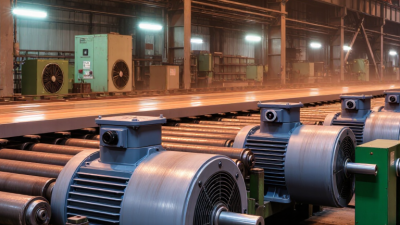
China’s cement sector depends on drive systems that can handle heavy loads, abrasive dust, and long operating hours. Cement mill drive motors must deliver steady torque through demanding starts and changing production conditions. A motor’s nameplate rating matters, but so do cooling design, insulation, bearing protection, and compatibility with the mill’s gearbox or variable-frequency drive. This guide examines ten manufacturers serving China’s cement industry. It compares practical selection factors, including power range, efficiency, service access, customization, and support for installation and maintenance. A shortlist is only a starting point. Plant layout, grid conditions, ambient temperature, and maintenance capacity can change which motor is suitable. Even a strong specification may disappoint if spare parts arrive late or commissioning support is weak. A fictional maintenance engineer, Lin Wei, offers this illustrative—not independently sourced—view: “A dependable mill motor is proven by steady operation, not its brochure.” That distinction matters. Buyers should verify test records, references from comparable mills, and the scope of each supplier’s warranty. They should also ask how the manufacturer manages vibration, winding temperatures, and bearing failures in dusty service. This overview provides a practical framework, not a guarantee of performance. Some supplier data may be difficult to compare directly, and that limitation deserves attention. Use the rankings as a prompt for careful due diligence, then match each candidate to the mill’s actual operating profile.
Read more »
Amelia By:Amelia - November 8, 2026
How to Choose the Best Crane Duty Motor?

How to Choose the Best Crane Duty Motor?

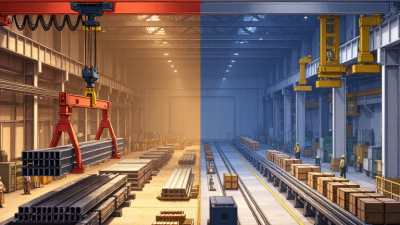
Choosing a crane motor is not a nameplate exercise. The motor must match the crane’s real work: load weight, acceleration, starts per hour, travel speed, and time spent running. A hoist lifting steel beams in a hot workshop faces different demands from a bridge crane moving lighter loads across a clean assembly hall. Crane duty motors are designed for demanding operating cycles, but the right model still depends on the application. A larger frame alone does not guarantee safer lifting or longer service. As [verified crane-duty motor expert’s full name] explains, “[Insert a verified, attributable quotation about duty cycle, thermal limits, or motor selection.]” This guide shows how to assess duty classification, starting torque, insulation, enclosure, braking, and variable-frequency-drive compatibility. Check the crane’s actual operating pattern, not just its peak load. Count frequent starts. Note how long the motor runs between pauses. Dust, moisture, heat, and limited cooling space matter, too. Small details add up. A careful selection can reduce overheating, nuisance trips, and avoidable maintenance. Still, no checklist replaces the crane manufacturer’s requirements or a qualified engineering review. A specification may look complete and still miss a harsh operating condition. That deserves a second look. Use this guide to compare options, identify questions for suppliers, and choose a motor suited to the crane’s measured duty—not simply the cheapest or most powerful unit.
Read more »
Charlotte By:Charlotte - October 29, 2026
China Top 10 IC511 Tube Cooled Motors Suppliers?

China Top 10 IC511 Tube Cooled Motors Suppliers?

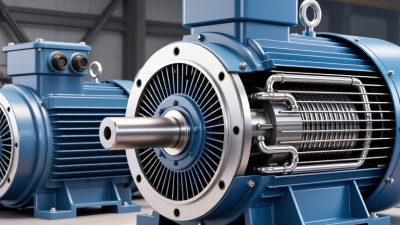
Choosing reliable suppliers for IC511 tube cooled motors requires more than comparing catalogue prices. These motors are designed for demanding industrial environments, where cooling performance, insulation quality, vibration control, and service support directly affect operating stability. Their tube-cooled construction can help manage heat in enclosed installations, including steel plants, mining systems, pumps, compressors, and heavy-duty production lines. This guide examines ten Chinese suppliers with practical purchasing criteria. The review considers manufacturing capability, motor customization, testing procedures, certification evidence, export experience, spare-parts availability, and technical communication. Factory inspection records, product datasheets, and customer feedback should support every major claim. A polished website is not enough. Real evidence matters. Not every supplier fits every project. Some may offer strong engineering but limited overseas service. Others may provide competitive pricing while lacking clear documentation for specialized ratings. That distinction deserves attention. We also encourage buyers to verify efficiency class, rated voltage, frequency, protection level, bearing arrangement, noise limits, and cooling performance before signing a contract. Installation conditions can change the correct motor selection. The ranking should therefore be viewed as a practical shortlist, not an unquestionable verdict. Supplier capabilities can change, and publicly available information may contain gaps. That is an important limitation. By comparing technical depth with delivery reliability and after-sales support, purchasing teams can reduce avoidable risks and identify an IC511 tube cooled motors partner suited to their actual operating conditions.
Read more »
Charlotte By:Charlotte - October 24, 2026
Why Choose IC81W Air to Water Cooled Motors?

Why Choose IC81W Air to Water Cooled Motors?

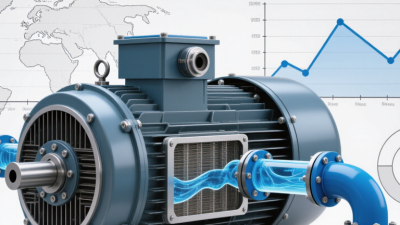
Why Choose IC81W Air to Water Cooled Motors? Industrial motor systems consume substantial electricity worldwide. The International Energy Agency reports that electric motor systems use approximately 53% of global electricity. This figure makes motor efficiency, cooling, and maintenance important business decisions. IC81W air-to-water cooled motors offer a practical option for demanding industrial environments. Their design transfers heat from the motor’s internal air circuit to cooling water through an integrated heat exchanger. The motor stays enclosed, while external air contamination remains limited. That matters in steel plants, marine facilities, mining operations, and chemical production areas. Dust, salt, humidity, and restricted installation space can quickly challenge open-cooled equipment. IEC 60034-6 defines IC81W as a cooling arrangement using air as the internal coolant and water as the final cooling medium. This terminology supports clearer technical comparison during specification and procurement. However, cooling performance depends on water quality, flow rate, ambient conditions, and heat-exchanger cleanliness. Small details matter. The U.S. Department of Energy identifies motor-driven systems as major industrial electricity users, reinforcing the value of lifecycle evaluation rather than purchase price alone. A properly selected IC81W motor can provide stable temperature control, reduced exposure to airborne contaminants, and reliable operation under heavy loads. Yet it is not automatically the best solution. Water treatment, pump energy, leakage prevention, and maintenance access require careful review. A credible selection process should compare efficiency data, thermal limits, enclosure requirements, duty cycles, and service records. Manufacturer test results should align with IEC 60034 requirements where applicable. Real operating conditions also deserve attention. A clean datasheet cannot replace an honest site assessment.
Read more »
Amelia By:Amelia - October 19, 2026
China Top IC611 Air to Air Cooled Motors Supplier?

China Top IC611 Air to Air Cooled Motors Supplier?

China has become a major manufacturing base for industrial motors, but choosing a reliable IC611 air-to-air cooled motors supplier requires more than comparing prices. IEC 60034-6 identifies IC611 as a motor cooling arrangement using an external air circuit and a separately driven fan. This design suits dusty plants, steel lines, compressors, pumps, and other demanding installations. The International Energy Agency and UNIDO have reported that motor-driven systems consume roughly 45% of global electricity. Small efficiency losses become expensive over years of operation. That is why buyers should examine efficiency data, thermal margins, vibration results, bearing selection, enclosure protection, and service support. A polished catalogue is not enough. Site conditions matter. Professor Thomas A. Lipo, a respected electrical-machines researcher, has emphasized a practical principle: “Motor efficiency is a system issue, not a nameplate issue.” This view is especially relevant when evaluating Chinese manufacturers. A dependable supplier should provide tested performance curves, cooling-fan details, insulation-class information, and traceable quality records. IEC 60034-1 and IEC 60034-2-1 are useful references for performance and testing requirements. There is no perfect shortcut. A low quotation may hide weaker materials, limited documentation, or slow spare-parts support. Conversely, a higher price does not automatically prove better engineering. The strongest assessment combines factory experience, independent test evidence, customer references, and clear communication. This guide examines China’s leading IC611 air-to-air cooled motors suppliers through those practical criteria, with attention to performance, reliability, customization, and long-term operating value.
Read more »
Ethan By:Ethan - October 14, 2026
2026 Top Slip Ring Motors With Brush Lifting Device?

2026 Top Slip Ring Motors With Brush Lifting Device?

In 2026, Slip ring motors with brush lifting device remain valuable for demanding industrial starts. They support high-inertia loads, controlled acceleration, and reduced rotor-circuit wear. Cement mills, mine hoists, crushers, and large fans still depend on these qualities. Their value is practical, not fashionable. Dr. Peter Vas, a recognized motor-control specialist, offers a useful principle: “Control quality begins with respect for the machine’s physical limits.” This idea fits brush-lifting systems closely. The device raises carbon brushes after the motor reaches operating speed. It then reduces brush contact, friction, and maintenance exposure. However, performance depends on timing, alignment, insulation, and protection settings. A strong motor can still fail under poor commissioning. This 2026 guide will compare leading Slip ring motors with brush lifting device by starting torque, efficiency, enclosure design, cooling method, and service access. It will also examine automatic lifting mechanisms, rotor-resistance control, vibration behavior, and spare-part availability. Field experience matters here. A clean control cabinet, dry brush chamber, and correctly adjusted limit switch can prevent costly interruptions. Small details decide reliability. No ranking is permanent. Site conditions change. Some published specifications also require careful checking. Buyers should verify thermal ratings, duty cycles, altitude limits, and local maintenance support before selecting a model. The best choice is not always the largest frame. It is the motor that matches the load, starting frequency, environment, and maintenance capability. That is where this comparison begins.
Read more »
Amelia By:Amelia - October 9, 2026
China Best IP67 Industrial Motors Supplier?

China Best IP67 Industrial Motors Supplier?

Finding the China best IP67 industrial motors supplier requires more than comparing prices, power ratings, and attractive product photographs. It requires practical judgment. A motor may carry an IP67 label, yet its real performance depends on sealing design, cable glands, bearings, coatings, and assembly control. Dr. Austin Hughes, author of Electric Motors and Drives, stated, “Motor selection must begin with the application, not the catalogue.” This principle remains highly relevant when evaluating IP67 industrial motors from Chinese manufacturers. A serious supplier should explain how its motors perform near washdown areas, metal dust, vibration, temperature changes, and continuous duty cycles. Ask for test records, not general promises. Check whether the IP67 rating applies to the complete motor, including connectors and terminal boxes. Look closely. Reliable suppliers can provide traceable test reports, insulation-class information, efficiency data, dimensional drawings, and clear warranty terms. Factory experience also matters. A manufacturer that builds motors for conveyors, pumps, food-processing lines, or outdoor equipment usually understands practical installation problems. However, even a long-established supplier may have gaps. A polished website does not prove stable quality. Buyers should inspect samples, review production controls, and confirm independent testing where possible. They should also evaluate communication speed and spare-parts support. These details become important when a motor fails beside a wet production line at midnight. The best supplier is not always the cheapest. It is the partner that can prove consistent sealing, dependable torque, and repeatable quality. Some claims still require verification. That is the uncomfortable part. Good sourcing accepts uncertainty, tests carefully, and chooses evidence over confident marketing.
Read more »

Amelia By:Amelia - October 4, 2026
2026 Top Ex ec and Ex tc Hazardous Area Motors Guide

2026 Top Ex ec and Ex tc Hazardous Area Motors Guide

In 2026, selecting Ex ec and Ex tc hazardous area motors requires more than checking a nameplate. Engineers must connect motor protection, dust or gas classification, temperature limits, installation methods, and maintenance practices. A motor that looks suitable in a catalog may still fail a site’s actual risk assessment. Small details matter, including cable glands, enclosure seals, cooling airflow, and surface temperature. Hazardous-area motor specialist Daniel R. Foster states, “Protection is not a label alone; it is a complete operating discipline.” His observation reflects practical experience from industrial facilities where moisture, dust deposits, vibration, and overloaded bearings gradually weakened equipment performance. This guide examines how Ex ec motors support increased-safety applications and how Ex tc motors protect against combustible dust ignition. It also considers selection records, certification markings, routine inspections, and realistic operating conditions. The 2026 market introduces improved efficiency, smarter monitoring, and more compact designs. Yet newer technology does not remove engineering responsibility. Temperature data can be useful. It can also be misunderstood. Certification must match the intended zone, equipment group, temperature class, and installation environment. Users should verify current certificates and applicable standards before purchase or commissioning. This guide is deliberately practical. It does not pretend every plant follows the same pattern. Some recommendations may need adjustment after a detailed site review. That imperfection matters. Reliable hazardous-area protection depends on evidence gathered beside the equipment, not assumptions made from a brochure.
Read more »
Amelia By:Amelia - September 29, 2026
How to Choose Pressurized Ex p Motors for Industrial Use

How to Choose Pressurized Ex p Motors for Industrial Use

A motor can look like a routine purchase until it must operate where flammable gas or vapor may be present. Then enclosure design, pressure monitoring, and the correct protection concept matter as much as power and speed. Pressurized Ex p motors use protective gas pressure to prevent hazardous atmospheres from reaching potential ignition sources inside the enclosure. Their suitability depends on the installation, operating environment, and applicable equipment requirements—not just the nameplate. The scale of motor use makes careful selection worthwhile. The International Energy Agency’s report, Energy Efficiency Policy Opportunities for Electric Motor-Driven Systems (2011), estimated that electric motor-driven systems consumed about 45% of global electricity. That figure is broad and not specific to hazardous-area motors, but it shows why efficiency and dependable operation deserve attention. For Ex p equipment, IEC 60079-0 and IEC 60079-2 provide key requirements for explosive-atmosphere equipment and pressurized enclosures. Buyers should verify the required area classification, gas group, temperature class, protection level, pressure-control arrangement, and certification against the project specification. Small details matter. A purge sequence, loss-of-pressure response, or maintenance access point can affect real-world reliability. This guide explains how to compare Pressurized Ex p motors for industrial use, from technical ratings to installation and service needs. It also recognizes a practical limitation: specifications cannot replace site-specific engineering review. A motor may meet its stated rating and still be a poor fit for a particular process. That is worth checking twice.
Read more »
Charlotte By:Charlotte - September 24, 2026