Explore expert articles, technical guides, application case studies, and engineering updates from Menzel Motors.
Why Choose IC81W Air to Water Cooled Motors?
Industrial motor systems consume substantial electricity worldwide. The International Energy Agency reports that electric motor systems use approximately 53% of global electricity. This figure makes motor efficiency, cooling, and maintenance important business decisions. IC81W air-to-water cooled motors offer a practical option for demanding industrial environments. Their design transfers heat from the motor’s internal air circuit to cooling water through an integrated heat exchanger. The motor stays enclosed, while external air contamination remains limited.
That matters in steel plants, marine facilities, mining operations, and chemical production areas. Dust, salt, humidity, and restricted installation space can quickly challenge open-cooled equipment. IEC 60034-6 defines IC81W as a cooling arrangement using air as the internal coolant and water as the final cooling medium. This terminology supports clearer technical comparison during specification and procurement. However, cooling performance depends on water quality, flow rate, ambient conditions, and heat-exchanger cleanliness.
Small details matter.
The U.S. Department of Energy identifies motor-driven systems as major industrial electricity users, reinforcing the value of lifecycle evaluation rather than purchase price alone. A properly selected IC81W motor can provide stable temperature control, reduced exposure to airborne contaminants, and reliable operation under heavy loads. Yet it is not automatically the best solution. Water treatment, pump energy, leakage prevention, and maintenance access require careful review.
A credible selection process should compare efficiency data, thermal limits, enclosure requirements, duty cycles, and service records. Manufacturer test results should align with IEC 60034 requirements where applicable. Real operating conditions also deserve attention. A clean datasheet cannot replace an honest site assessment.
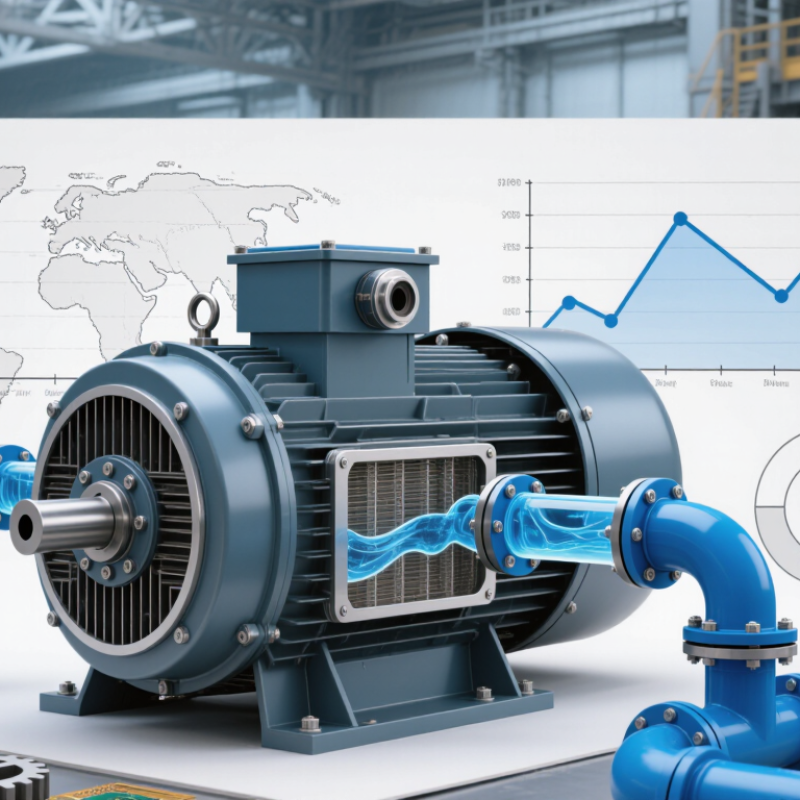
An IC81W air-to-water cooled motor uses a closed internal air circuit and an external water heat exchanger. The internal fan moves warm air across the stator and rotor. Water then removes heat through the cooler core. IEC 60034-6 classifies this arrangement as IC81W. It is designed for demanding installations where open-air cooling is impractical.
The value is controlled heat removal. According to the International Energy Agency, electric motor systems consume roughly half of global electricity. Efficient thermal management can support stable performance and reduce temperature-related aging. The U.S. Department of Energy’s 2022 Motor Systems Market Assessment also identifies motor-driven equipment as a major share of industrial electricity use. Every degree matters.
It is not magic. Cooling water quality, flow rate, and pressure need regular verification. A neglected cooler can restrict heat transfer, even when the motor looks clean outside. In field practice, operators should compare winding temperatures, bearing readings, and water-side pressure drops. IEC 60034-1 provides the broader framework for motor performance and thermal limits. However, real results depend on correct sizing, installation, and maintenance. One overlooked detail is condensation risk during shutdowns. A practical inspection plan should address it.
An IC81W motor uses an internal air circuit and an external water circuit separated by a closed heat exchanger. The motor’s internal fan circulates air across the active parts, while water removes the heat through the air-to-water cooler. The chart shows the theoretical heat-removal capacity of clean water at a constant 10°C temperature rise, calculated using Q = m × cp × ΔT, where water density is approximately 1 kg/L and specific heat capacity is approximately 4.186 kJ/kg·K.
Higher water flow increases heat-removal capacity, helping IC81W motors maintain stable operating temperatures in enclosed, dusty, humid, or space-limited installations where an air-cooled enclosure may be less suitable.
IC81W cooling technology keeps the motor enclosure closed while transferring heat from internal air to water. An internal fan moves warm air across the stator, rotor, bearings, and other heat-producing parts. The heated air then passes through a compact water-cooled heat exchanger.
Water flows through tubes inside the exchanger. Heat crosses the tube walls and moves into the water circuit, while cooled air returns to the motor interior. The air and water remain separated.
This arrangement limits dust entry and supports stable operation in demanding industrial environments. It also helps maintain a controlled winding temperature during continuous duty.
In practical installations, water flow, inlet temperature, and pressure require regular checks. Blocked passages can reduce cooling performance quickly. Water quality matters too, because scale or corrosion may restrict the exchanger. A temperature sensor can reveal rising heat before damage develops. Small details matter.
Engineers should match the cooling system with the motor load, site temperature, and available water conditions. An IC81W motor can be efficient, but it is not maintenance-free. I have seen cooling assumptions fail when airflow inside the enclosure was ignored. The design still needs inspection, measured data, and sensible operating limits.
IC81W motors offer a practical cooling solution for high-power industrial equipment. Their enclosed air circuit uses a water-cooled heat exchanger to remove internal heat. This design helps protect windings from dust, moisture, and airborne particles. It also keeps the surrounding workspace cooler than many air-cooled alternatives. That matters in steel plants, pumps, compressors, and enclosed production areas.
Temperature stability is a major benefit. During site inspections, engineers often notice fewer thermal alarms when water flow remains steady. A controlled temperature can support longer insulation life and more consistent motor performance. The compact cooling arrangement may also save floor space. Less fan noise can improve working conditions near operating machinery. It runs quietly.
IC81W motors still require thoughtful installation. Clean cooling water, suitable flow, and regular filter checks are essential. A blocked cooler can cause overheating before operators notice a serious problem. The system is not flawless. Leaks, corrosion, or pump failure can create new maintenance risks. For reliable service, technicians should monitor inlet temperature, outlet temperature, pressure, and vibration. Correct alignment remains important, even with advanced cooling. Engineers should also verify local water conditions before selecting the motor. In some applications, the cooling system needs more attention than expected. That trade-off deserves honest evaluation during project planning.
| Data Dimension | IC81W Motor Characteristic | Main Benefit | Engineering Consideration |
|---|---|---|---|
| Cooling designation | IC81W, an IEC cooling-system designation for an enclosed motor with an air-to-water heat exchanger. | Provides effective heat removal without depending on a large external air stream. | The complete cooling package requires suitable water connections, flow control, and heat-exchanger monitoring. |
| Cooling media | Internal air circulates within the motor, while water removes heat through a separate heat exchanger. | Separates the motor’s internal air circuit from the surrounding atmosphere. | Water quality, temperature, flow rate, pressure, and corrosion control must comply with the equipment design requirements. |
| Enclosure arrangement | Closed motor enclosure with an integrated or mounted air-to-water heat exchanger. | Reduces exposure of internal motor components to dust, moisture, fibers, and process contaminants. | The enclosure protection rating remains application-dependent and must be confirmed from the motor documentation. |
| Power density | Efficient heat transfer allows high thermal performance within a relatively compact motor arrangement. | Can help reduce equipment-room space and support compact drive-system layouts. | Actual size and power density depend on rated output, speed, duty, insulation system, and permissible temperature rise. |
| Noise performance | Heat is transferred through water rather than relying primarily on a high-volume external ventilation airflow. | May reduce aerodynamic noise compared with similarly rated air-cooled arrangements. | Total sound pressure still depends on bearings, electromagnetic design, speed, pumps, fans, and the installation structure. |
| Ambient-temperature influence | Motor heat rejection is linked to the temperature and flow conditions of the cooling water. | Provides more controlled thermal behavior where ambient air conditions are hot, dusty, or variable. | Cooling-water inlet temperature and flow must stay within the specified operating limits to prevent overheating or condensation. |
| Suitable applications | Well suited to continuous-duty industrial drives requiring enclosed construction and controlled heat dissipation. | Useful for pumps, compressors, fans, conveyors, mills, marine equipment, and process machinery when a water system is available. | The motor must be matched to the driven load, duty cycle, starting method, speed range, and site conditions. |
| Environmental protection | The main motor cooling circuit is closed, limiting direct exchange between internal motor air and the working environment. | Helps maintain reliable operation in contaminated industrial atmospheres when the enclosure is correctly specified. | A closed cooling circuit does not eliminate the need for correct sealing, drainage, corrosion protection, and routine inspection. |
| Thermal calculation | Heat transfer through the water circuit is commonly evaluated using the relationship Q = m × cp × ΔT. | Provides a measurable basis for selecting water flow and checking cooling performance. | Q is heat-removal rate, m is mass-flow rate, cp is the specific heat capacity of water, and ΔT is the water temperature rise. |
| Maintenance requirements | Requires inspection of the heat exchanger, water circuit, seals, connections, and internal motor condition. | A planned maintenance program helps preserve heat-transfer performance and motor service life. | Potential concerns include scaling, blockage, leakage, corrosion, inadequate flow, and condensation. |
| Primary selection advantage | Combines enclosed construction with a dedicated water-based heat-rejection path. | Offers a practical solution where compactness, contamination resistance, controlled temperature, and lower airflow are important. | IC81W is most beneficial when a reliable cooling-water infrastructure and appropriate operating controls are available. |

Note: Final motor selection should be based on the rated output, speed, duty cycle, ambient conditions, cooling-water parameters, enclosure protection, installation arrangement, and applicable IEC requirements.
IC81W motors are commonly used in large industrial drive systems. Their enclosed construction suits dusty, humid, or contaminated operating areas. Internal air circulates through the motor, while external water removes heat through a cooler. This design keeps the motor housing relatively clean and limits direct exposure to airborne particles.
You will often find these motors on pumps, compressors, fans, conveyors, crushers, and rolling equipment. They also fit demanding applications in power generation, steel processing, mining, chemical production, and water infrastructure. A protected enclosure matters where ordinary air-cooled motors would draw in abrasive dust. It also helps control noise in enclosed plant rooms.
Field experience shows that IC81W motors need careful cooling-water management. Blocked tubes, poor water quality, or insufficient flow can reduce cooling performance. Small details matter. Operators should monitor temperature, flow, vibration, insulation condition, and cooler cleanliness. Motor selection is not always straightforward. A compact installation may save floor space, yet it can require more disciplined maintenance. Engineers should also check load cycles, starting frequency, ambient conditions, and available water systems before specifying the motor.
An IC81W motor uses a closed internal air circuit and an external water heat exchanger. This design limits dust entry and supports stable temperature control. Selection begins with duty, not frame size. Define rated power, speed, starting torque, load cycle, and installation altitude. Confirm water temperature, flow, pressure, and chemistry before approving the specification. A heat exchanger sized for average load may fail during repeated starts. Leave operating margin. Check enclosure protection, insulation class, bearing arrangement, and shaft coupling requirements. Use applicable technical standards and verified technical data.
Maintenance starts with clean, stable cooling water. Inspect the inlet strainer, hoses, valves, and heat exchanger for blockage or leakage. Record flow and pressure during commissioning. These readings create a useful baseline for later diagnosis. Check winding sensors, bearing temperatures, vibration, and current balance at planned intervals. Unusual vibration often appears before visible damage. Do not ignore it. Stop and investigate.
Protect the water circuit during long shutdowns, especially where freezing is possible. Flush deposits with a procedure compatible with exchanger materials. Never guess the cleaning chemical or concentration. Review alignment after transport, foundation work, or coupling changes. A small angular error can raise bearing load and noise. Keep records of ambient temperature, water conditions, and actual motor load. Selection can still be imperfect. A motor may meet nameplate data yet struggle with real cooling conditions. Recheck assumptions after the first operating season.
An internal fan moves warm air across the stator, rotor, and bearings. The air then passes through a water-cooled heat exchanger. Water absorbs heat through the exchanger tubes. The cooled air returns inside the closed enclosure.
No, they remain separated. Heat crosses the tube walls into the water circuit. This arrangement limits dust entry. The motor enclosure stays closed.
The enclosed structure helps protect windings from dust, moisture, and airborne particles. Stable temperatures can support insulation life and consistent performance. The surrounding workspace may also stay cooler. It runs quietly.
They suit pumps, compressors, fans, conveyors, crushers, and rolling equipment. Common environments include steel processing, mining, power generation, and water infrastructure. They are useful in dusty or humid plant rooms. Floor space may also be limited.
Operators should check flow, inlet temperature, outlet temperature, and pressure. Water should remain clean enough to limit scale and corrosion. Blocked passages can reduce cooling quickly. Small details matter.
Restricted tubes reduce heat transfer. Internal temperature may rise before obvious damage appears. A temperature sensor can reveal this change early. The risk is easy to underestimate.
No, it still needs inspection and measured monitoring. Technicians should check cooler cleanliness, vibration, insulation condition, and water flow. Leaks, corrosion, or pump failure can create problems. Not maintenance-free.
Engineers should match the motor with the load, site temperature, and water conditions. They should review starting frequency and load cycles. Available water pressure also matters. The design is efficient, but assumptions can fail.
Scale may narrow water passages, while corrosion can damage exchanger surfaces. Poor alignment can still increase vibration. Filters and cooling circuits need regular attention. I would not rely on cooling alone.
IC81W air-to-water cooled motors are industrial motors designed to remove heat through a closed air-to-water cooling system. Inside the motor, internal air circulates to absorb heat from the windings, bearings, and other working components. A separate water circuit then transfers this heat away through a heat exchanger, allowing the motor to maintain stable operating temperatures without relying on direct exposure to outside air.
The main advantages of this design include effective heat control, compact installation, reduced sensitivity to dusty or humid environments, and reliable performance during continuous or demanding operation. These motors are commonly used in heavy industrial equipment, pumps, compressors, fans, conveyors, and other applications requiring high power and dependable cooling. Proper selection should consider rated power, speed, voltage, load conditions, cooling-water quality, and installation space. Regular maintenance should include checking water flow, inspecting seals and heat exchangers, cleaning cooling passages, monitoring vibration and temperature, and following a suitable inspection schedule.